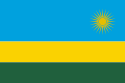
|
---
|
Rwanda Profiles
Republic of
Rwanda Geography and basic facts.
Rwanda in the
Wikipedia
Rwanda history, politics, map, geography, economy,
demography, full information and links.
Rwanda in the CIA
Factbook
Rwanda information about the economy, geography, government,
population, communications, military and transnational
issues.
BBC Rwanda
Profile
Up to date resume about Rwanda leaders,
history, main events,
map, flag, geography, news, politics and media links.
Rwanda ICT
Sector
Rwanda official ICT data, with useful information.
Rwanda Telecommunications and
Broadband Reports
Rwanda Telecoms, Broadband and Mobile
Market Report
Rwanda's exposure to the global economic crisis is amplified by political instability
following a controversial change of government in early 2009. This has led to weak
subscriber growth, reduced consumer spending and, as a consequence, intensified
price competition between the three mobile network operators: Orange, Zain and Telma,
the incumbent telco.
Read the summary and table of
contents
African Mobile Broadband, Data and Mobile Media
Market
This annual report offers a wealth of information on the mobile broadband and data
market in 38 African countries as well as the emerging market for mobile content,
applications and media on the continent. Subjects covered include Mobile data services,
SMS, MMS, WAP, GPRS, EDGE, 3G mobile broadband technologies, WCDMA, HSPA, EV-DO;
statistics, trends and analysis; major market players; mobile content, applications
and media; Mobile TV; location-based services; M-commerce, m-payments, m-banking.
See the table of contents
and report details
African Fixed and Wireless Broadband and Internet Markets
Report
Large parts of Africa gained access to international fibre bandwidth for the first
time via submarine cables in 2009 and 2010. In other parts of the continent, additional
fibre systems have brought competition to a previously monopolised market. More
cables are expected to go online in 2011. This has led to massive investments into
terrestrial fibre backbone infrastructure to take the new bandwidth to population
centers in the interior and across borders into landlocked countries.
See report table of
contents
|
Internet, ICT, Broadband and Consumer E-Commerce
in Rwanda
October 2014 Review
As of October 2014, Rwanda has 7,601,980 active mobile
telephone subscribers, according to the Rwanda Utilities Regulatory Authority (RURA).
The great mayority (99%) are prepaid subscribers and only 1% are postpaid subscribers.
There are three companies offering the service: MTN Rwanda Ltd, Tigo Rwanda Ltd and
Airtel Rwanda Ltd.
Fixed line telephone subscribers are only 49,006 as of the third quarter of 2014.
Liquid Telecom Rwanda Ltd. dominates the fixed telephone market.
Internet subscribers as of September 2014 numbered 2,796,781 in Rwanda. The
penetration rate has showned a marked increase due to the growth of the mobile
Internet subscriptions and is estimated at 25.4%.
|